Goodomics blog
Bioinformatics QC thresholds should not live in old notebooks
A short draft note on why omics QC needs reusable thresholds, cohorts, and report context instead of scattered spreadsheets.
Goodomics ·
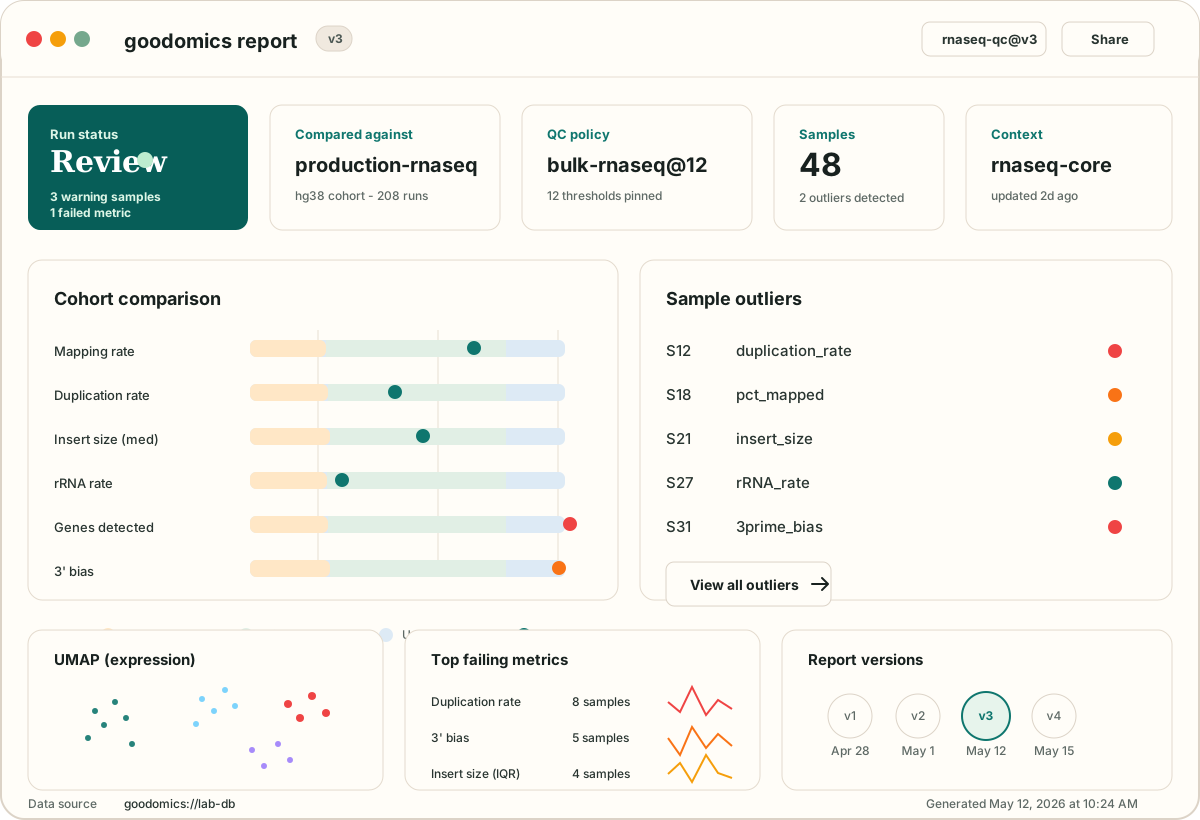
Most bioinformatics teams already generate plenty of QC metrics. The hard part is remembering what those numbers mean months later.
A sample may have a mapping rate, duplication rate, library complexity score, insert size distribution, and a handful of assay-specific checks. The report might look fine in isolation, but the real review question is usually comparative:
- Does this sample look normal for this assay?
- Which previous runs are we comparing against?
- Were these thresholds still current when the report was generated?
- Did this fail because of biology, batch, pipeline version, or assay drift?
Goodomics is a draft attempt at making that context portable. The starting point should stay simple:
goodomics report ./results
That command should produce a useful HTML report from common outputs and custom tables. When a team needs history, the same workflow can ingest results into a local or hosted Goodomics database:
goodomics ingest ./results \
  --project rnaseq-core \
  --report rnaseq-qc@v3 \
  --cohort production-rnaseq-hg38@2026-05
The important part is not a prettier dashboard. The important part is that each QC decision can say: this run was evaluated against this cohort, using this report version and this QC policy version.
That is the small wedge Goodomics is exploring: MultiQC-simple adoption, with cohort-aware context when the team is ready for it.